Which flour to use for baking: a Canadian guide with real protein numbers
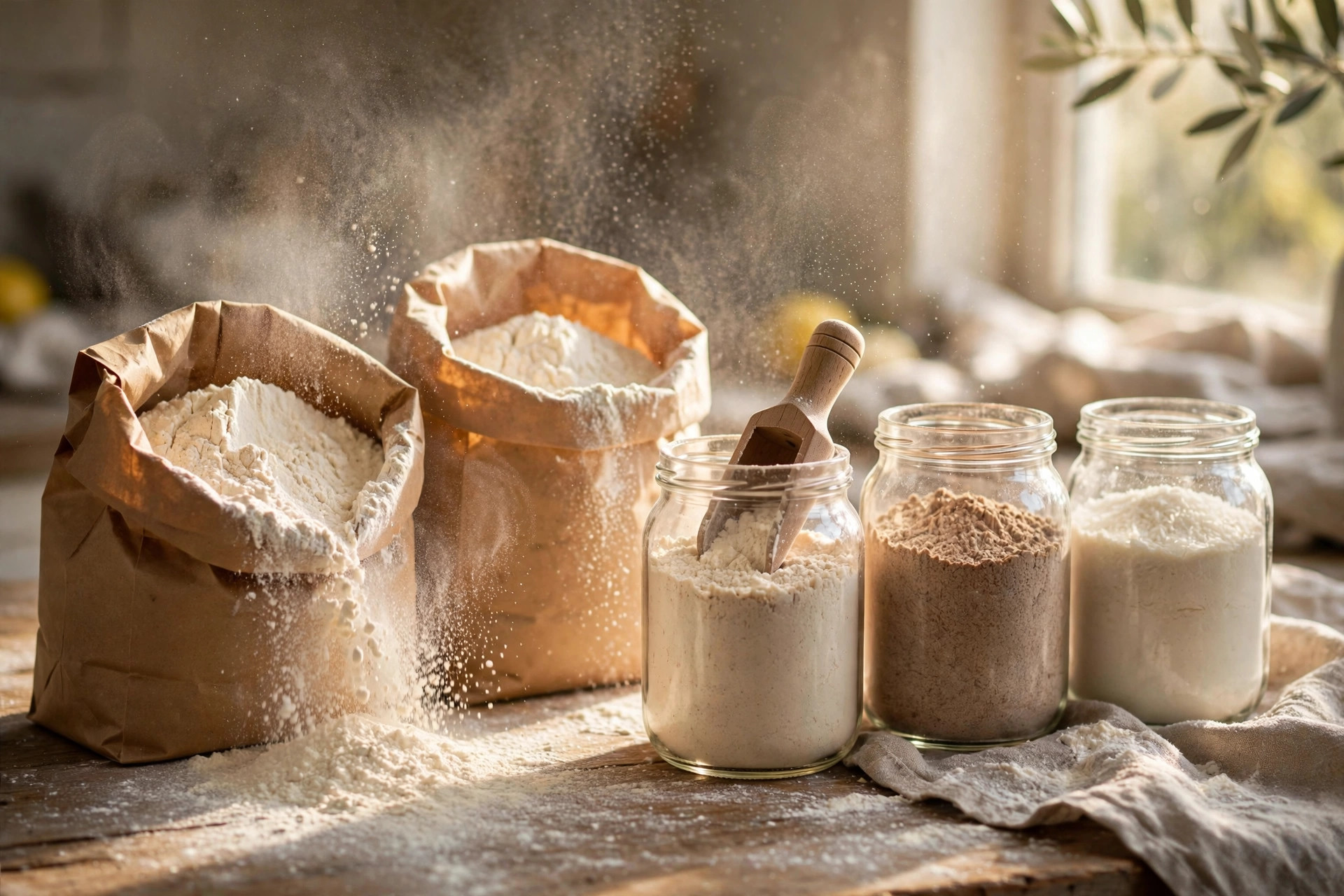
Here's something most flour guides won't tell you: Canadian all-purpose flour is not the same as American all-purpose flour. It's milled from harder wheat and carries noticeably more protein — which means a US recipe developed with soft American flour can turn out tougher than expected in a Canadian kitchen. Once you know the actual protein numbers on the bags in your grocery store, the whole flour aisle starts making sense.
Why your flour behaves differently than the recipe expects
Protein is what matters in flour: more protein means more gluten, more structure, and a chewier result. A bag of Robin Hood All Purpose Flour lists 4 grams of protein per 30-gram serving — that's 13.3% protein. Five Roses All Purpose lands at the same 13.3%. Compare that to the American brands US recipes are tested with: King Arthur all-purpose at 11.4–11.7%, Gold Medal and Pillsbury at 10–11%, and White Lily all the way down at 9%.
Robin Hood's packaging confirms the positioning: its all-purpose is milled from a blend of hard red spring wheat and soft wheat, with protein sitting between its Best for Bread flour and its Best for Cake & Pastry flour. So when a US blogger's "tender, delicate" cookie recipe turns out sturdy in your kitchen, this 2–4 percentage point gap is often why.
The main flour types, with verified protein numbers
| Flour | Protein | Best for |
|---|---|---|
| Robin Hood / Five Roses all-purpose | 13.3% | Everyday default; breads, sturdy cookies, muffins |
| US all-purpose (King Arthur, Gold Medal) | 10–11.7% | What most US recipes assume |
| Robin Hood Best for Cake & Pastry | 10% | Tender cakes and delicate cookies in Canada |
| Cake flour (general) | 6–8% | Feather-light layer cakes |
| Pastry flour | 8–9% | Pie crusts, tart shells, flaky pastry |
| Bread flour | 12–15% | Yeasted breads, bagels, chewy pizza crust |
The protein figures for Robin Hood and Five Roses are read straight off their Canadian nutrition labels (4 g per 30 g); the US brand figures come from the Tufts food lab's flour database. A few practical takeaways: Canadian all-purpose at 13.3% is genuinely close to bread-flour territory, which is great news for bread bakers — your everyday bag makes a respectable loaf. It's less great for delicate cakes, where that extra protein builds toughness you don't want.
When a US recipe calls for "cake flour"
American cake flour (brands like Swan's Down) is a low-protein, finely milled flour around 6–8% protein. You won't find those exact brands on Canadian shelves, but you don't need them: Robin Hood Best for Cake & Pastry, at 10% protein, is the domestic answer for tender cakes and soft cookies. Reach for it for vanilla cake, white cake, and red velvet — anywhere a fluffy, delicate crumb is the goal.
Don't have it? Make a workable substitute: measure 1 cup of all-purpose flour, remove 2 tablespoons, add 2 tablespoons of cornstarch, and sift or whisk thoroughly two or three times. By weight, that's 105 g of all-purpose plus 14 g of cornstarch per cup. The starch dilutes the protein and interrupts gluten strands, getting you close enough for everyday cakes.
One caveat: don't use cake flour (real or DIY) everywhere. Chocolate cake already contains cocoa — itself a very fine, dry ingredient — and pairing it with cake flour produces a flimsy crumb. Carrot and banana cakes, with their wet add-ins, need the backbone of all-purpose. Save the low-protein flour for cakes where tenderness is the whole point.
What each bag costs per bake
A 5 kg bag of Robin Hood All Purpose at $16.99 works out to $0.34 per 100 g. A standard loaf of bread using 500 g of flour therefore carries about $1.70 in flour — the yeast and salt are rounding errors beside it. The DIY cake-flour substitute costs you nothing extra beyond the cornstarch already in your pantry, which is the real argument for the hack: it saves you buying and storing a second bag for the three times a year a recipe demands cake flour. If you bake tender cakes monthly, though, the dedicated Best for Cake & Pastry bag earns its shelf space.
FAQ
Can I use Canadian all-purpose flour for bread? Yes — at 13.3% protein it's well into bread-flour range and makes a strong, chewy loaf. It's one of the quiet advantages of the Canadian bag.
Why are my cookies tougher than the recipe photos? If the recipe was developed with 10–11% American all-purpose and you're baking with 13.3% Canadian flour, the extra gluten is the likely culprit. Try the Cake & Pastry blend for your next batch.
Is the cornstarch substitute as good as real cake flour? Close enough for everyday baking. For angel food cake or a wedding-tier white cake where texture is everything, buy the real low-protein flour.
Keep readingNext: measuring right — weight vs. volume →