Butter vs oil in baking: choose by where the cake is going
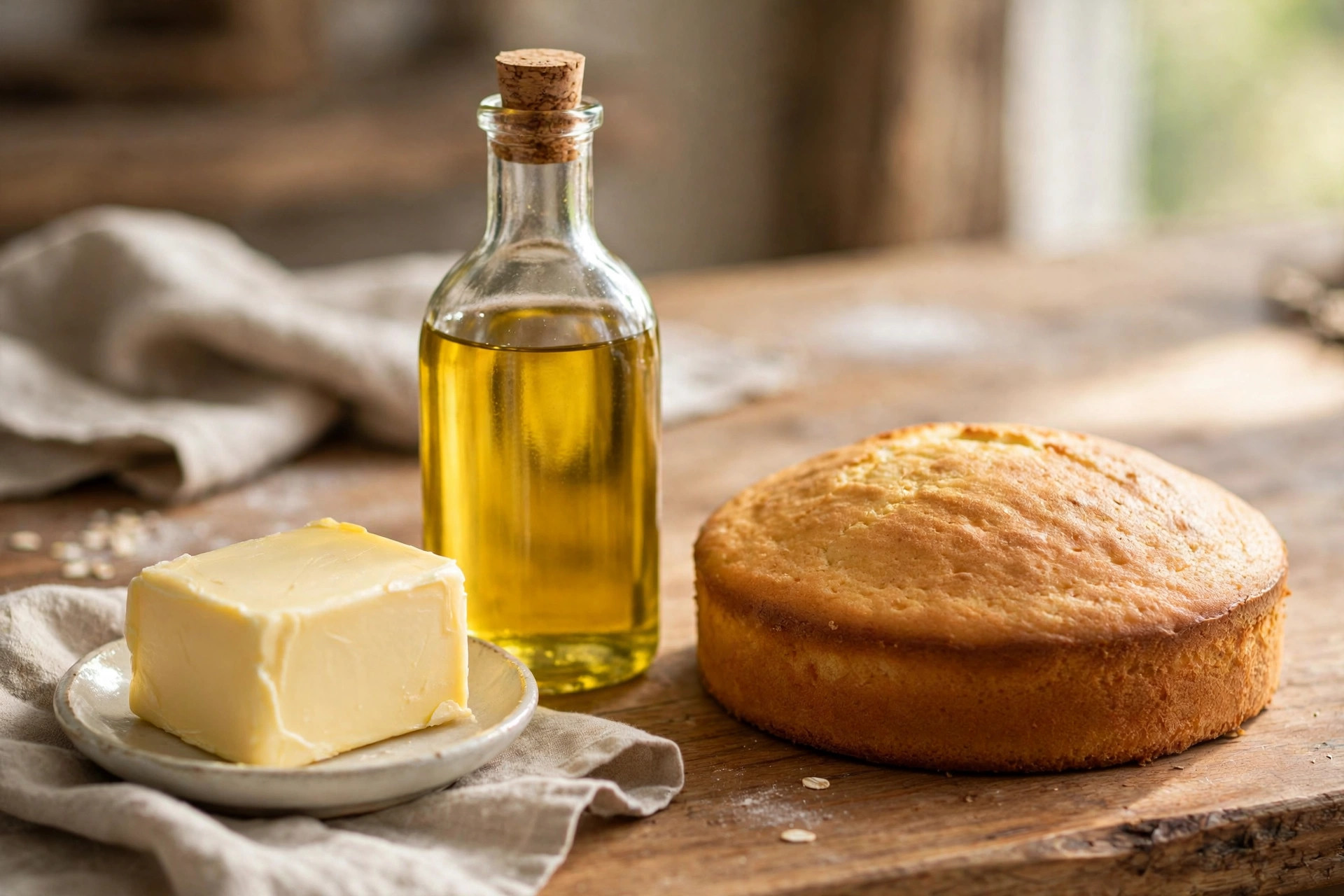
Ask five pastry chefs whether butter or oil makes the better cake and three will say butter — then all five will admit it depends on the cake. There is a faster way to decide than polling chefs: ask where the cake will be served. That one question settles most butter-versus-oil debates before they start.
The fridge rule
Here is the decision framework. Will the cake be served cold or stored in the fridge? Use oil. Butter is solid at room temperature, so a butter cake firms up when chilled and eats dense and waxy straight from the fridge. Oil stays liquid, which is why oil-based chocolate cakes taste velvety even cold. Served at room temperature and flavor is the star? Use butter — nothing matches its richness, and creaming it with sugar traps air that gives pound cakes and layer cakes their lift.
The third option is the hybrid: use both. Melted butter plus oil in the same batter gives you butter's flavor with oil's lasting moisture — a combination professional bakers reach for when a cake needs to do everything.
What butter and oil actually are
The reason swaps sometimes fail is composition. Butter is roughly 80% fat — the nutrition panel on a standard 454 g block shows 8 g of fat per 10 g serving — with the rest being water and milk solids. Oil is essentially 100% fat. That water content isn't filler; it turns to steam in the oven, affects gluten development, and is part of why butter crusts brown and crisp the way they do. When you swap one for the other without adjusting, you're changing the water content of the batter, not just the fat.
The swap math
If a recipe calls for butter and you only have oil (or the reverse), use this ratio: 1 cup of butter ≈ ¾ cup of oil. The reduction accounts for the water you'd otherwise be adding with the butter. Two more adjustments matter. First, slightly reduce the recipe's other liquids when swapping oil in for butter, since you're removing that water content. Second, remember that creaming only works with solid fat — you cannot cream oil and sugar, so an oil-based batter mixes by a different method (whisk wet into dry) and won't get the aeration creaming provides.
When each one wins
| Situation | Winner | Why |
|---|---|---|
| Pound cake, vanilla layer cake | Butter | Flavor is the star; creaming builds structure |
| Chocolate cake, carrot cake, red velvet | Oil | Stays moist for days; neutral flavor lets cocoa/spice lead |
| Muffins, quick breads | Oil | Tender crumb, longer shelf life, simpler mixing |
| Cookies, pie crusts, frostings | Butter | Crisp edges, flaky steam pockets, rich flavor |
| Cake served refrigerated | Oil | Stays soft when cold; butter firms up |
| Vegan / dairy-free baking | Oil | No animal products at all |
What it costs per cake
Butter is usually the most expensive ingredient in the bowl. At $5.99 for 454 g, the 170 g (¾ cup) a standard cake uses costs about $2.24. The equivalent 180 ml of canola oil, at $9.90 for 3 litres, costs about $0.59. Switching a single cake from butter to oil saves roughly $1.65 — meaningful if you bake weekly, and one more reason oil-based cakes are the budget-friendly default. (Prices checked October 2026 at Ontario grocery stores; sales move butter's number around a lot, so stock up when it dips.)
A quick nutrition note
Per tablespoon, butter runs about 102 calories with 7 g of saturated fat, while oil runs about 120 calories with almost no saturated fat. Butter carries vitamins A, D, E, and K from the milk; some oils carry vitamin E. Neither is a health food in cake quantities — pick based on the cake, not the halo.
FAQ
Can I use oil instead of butter in any cake? In moist, dense cakes (chocolate, carrot, banana), yes, with the ¾-cup-per-cup ratio. In pound cake and croissants, no — butter's structure and steam are doing real work there.
Why did my butter cake go hard in the fridge? That's just butter being butter — it solidifies when cold. Serve at room temperature, or bake oil-based next time if the cake lives in the fridge.
Does the type of oil matter? Use neutral oils (canola, vegetable, light sunflower) so no flavor competes with the cake. Save the extra-virgin olive oil for savory baking.
Keep readingNext: ingredient temperature — butter, eggs, and milk →